
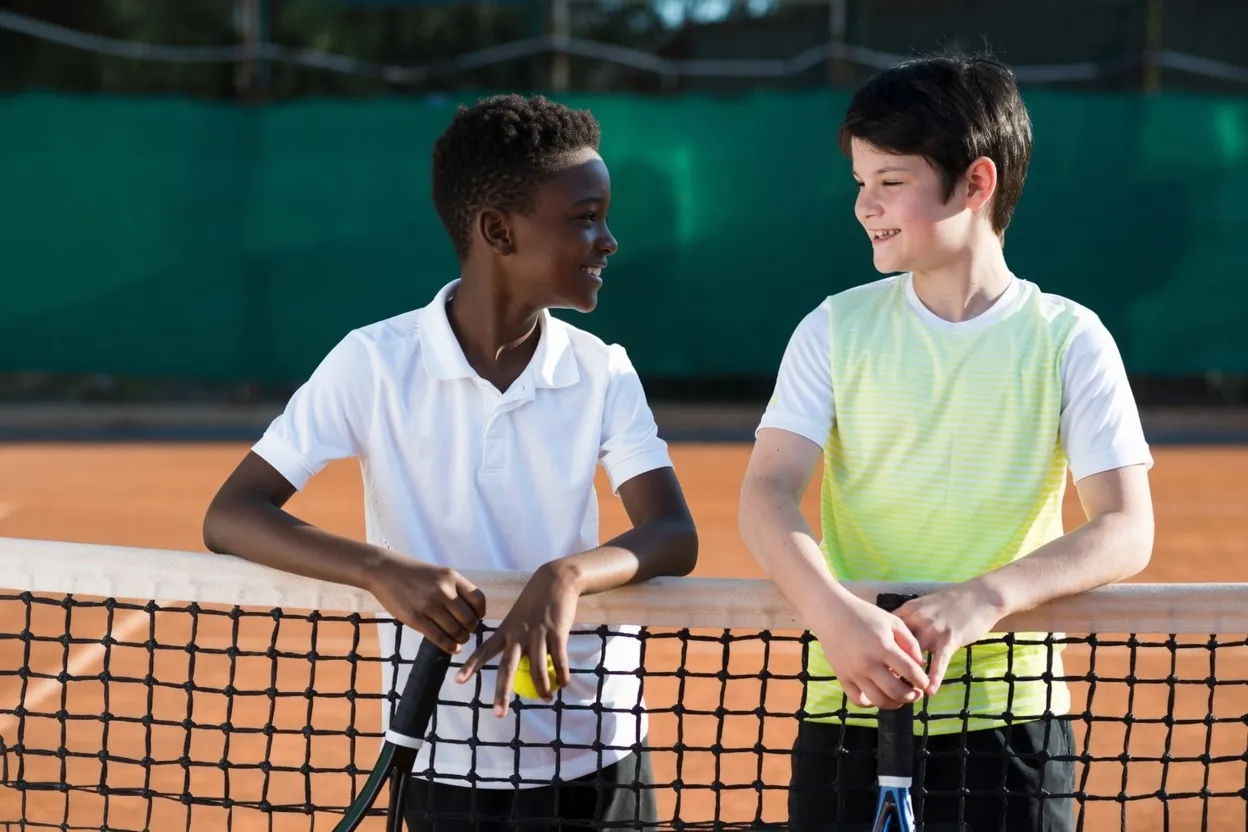
When parents first introduce their children to tennis, one of the most common questions is why they are not immediately given the standard yellow tennis ball. At first glance, it may seem unusual that children use different coloured balls instead of learning with the same equipment as adults. However, there is a very good reason for this approach.
Children develop best when the game is adapted to their age, physical strength, coordination, and experience. Using the correct tennis ball allows young players to enjoy longer rallies, learn proper technique, and build confidence without feeling overwhelmed. Rather than struggling to hit a fast moving ball, they can focus on developing the skills that will support them throughout their tennis journey.
The progression from red ball to orange ball, then green ball, and finally the standard yellow ball creates a structured learning pathway. Each stage prepares children for the next while making the sport more enjoyable and rewarding.
In this guide, we will explain the purpose of each coloured tennis ball, how they differ, and why following the correct progression helps children become stronger, more confident players.
Why Different Tennis Balls Are Used
Children are not simply smaller versions of adult players. They have different levels of strength, coordination, movement, and reaction speed. Asking a young child to hit a full pressure yellow tennis ball on a full sized court often leads to frustration rather than success.
A standard yellow ball travels quickly, bounces high, and requires more strength to control. Younger players may struggle to reach the ball, maintain rallies, or develop proper technique because they spend most of their time chasing rather than learning.
Coloured tennis balls are specifically designed to solve these challenges. They are softer, slower, and bounce lower, giving children more time to prepare their shots and make good decisions.
This creates a learning environment where success becomes achievable from the very first lesson.
The Benefits Of Progressive Tennis Coaching
Using the correct ball at each stage offers far more than simply making the game easier.
Children benefit from:
- Better hand and eye coordination
- Improved timing
- Longer rallies
- Increased confidence
- Proper stroke development
- Better movement around the court
- Greater enjoyment during lessons
Instead of developing bad habits by trying to force powerful shots, children learn correct technique naturally through repetition and positive experiences.
This approach builds a stronger foundation that supports future success with the standard yellow tennis ball.
Understanding Red Ball Tennis
Red ball tennis is the starting point for most young players, typically between the ages of four and eight, although the exact age depends on each child’s development.
The red ball is much softer than a standard tennis ball and travels significantly slower. It also bounces lower, making it much easier for young children to make contact with the ball consistently.
Red ball tennis is usually played on smaller courts with shorter racquets that are easier for children to control.
At this stage, coaching focuses on fundamental skills such as:
- Holding the racquet correctly
- Developing balance
- Learning basic movement
- Improving coordination
- Introducing simple rallying
- Building confidence through success
Lessons often include fun games and activities that keep children engaged while teaching important tennis skills.
Because children experience success early, they are more likely to enjoy the sport and continue learning.
Understanding Orange Ball Tennis
Once children become comfortable with red ball tennis, they progress to the orange ball stage.
The orange ball is slightly faster and bounces a little higher than the red ball, providing a gradual increase in challenge without overwhelming young players.
The court size also becomes larger, allowing children to improve their movement and court positioning while continuing to develop their technical skills.
During orange ball tennis, players begin learning:
- More consistent rallies
- Improved serving technique
- Better footwork
- Court awareness
- Shot placement
- Tactical decision making
This stage bridges the gap between beginner tennis and more advanced play while maintaining a pace that supports good technique.
Children continue building confidence as they develop greater control over the ball.
Understanding Green Ball Tennis
Green ball tennis represents the final development stage before players transition to the standard yellow tennis ball.
The green ball has slightly reduced pressure compared to a yellow ball, meaning it still travels a little slower and bounces slightly lower.
At this stage, children usually play on a full sized court and begin experiencing conditions that closely resemble standard tennis.
Green ball tennis allows players to refine important skills such as:
- Consistency
- Power control
- Spin
- Serving accuracy
- Match strategy
- Defensive and attacking play
Because the transition happens gradually, children avoid the frustration that often comes from moving directly to the faster yellow ball too early.
They continue strengthening both their technical ability and tactical understanding of the game.
Understanding Yellow Ball Tennis
The yellow tennis ball is the standard ball used in professional and adult tennis.
By the time children reach this stage, they have already developed many of the skills needed to control the speed, bounce, and movement of the ball.
Players are now ready to experience the full demands of the sport while continuing to improve their technique and match play.
Yellow ball tennis focuses on developing:
- Advanced stroke production
- Powerful serves
- Tactical awareness
- Competitive match play
- Physical conditioning
- Mental resilience
Because children have progressed through the earlier stages, they arrive at yellow ball tennis with greater confidence and stronger technical foundations.
This creates a much smoother transition into competitive tennis.
Why Progression Matters
Some parents believe starting with the standard yellow ball will help children improve faster. In reality, the opposite is often true.
Learning with equipment that is too difficult can lead to poor technique, frustration, and loss of confidence.
Children may begin:
- Swinging incorrectly
- Relying on poor footwork
- Avoiding rallies
- Becoming discouraged
- Losing interest in tennis altogether
The progressive ball system allows children to master one stage before moving to the next.
Each new challenge builds naturally on previously learned skills, creating confident players with sound technique.
Building Confidence At Every Stage
Confidence plays a major role in a child’s sporting experience.
When children can successfully rally, serve, and control the ball, they become excited about learning more. Every successful shot reinforces the belief that they are improving.
Progressive tennis coaching creates regular opportunities for achievement.
Instead of feeling frustrated by constant mistakes, children enjoy measurable progress that motivates them to continue practising.
This positive experience helps build resilience, patience, and a lifelong love for the game.
How Coaches Decide When A Child Should Progress
Every child develops at their own pace.
Rather than progressing according to age alone, experienced coaches look at several factors before moving a player to the next stage.
These include:
- Ball control
- Rally consistency
- Movement skills
- Confidence
- Technical development
- Physical readiness
- Overall enjoyment
Some children progress quickly, while others benefit from spending additional time mastering each stage.
The goal is always to ensure children feel challenged without becoming overwhelmed.
The Role Of Parents During Development
Parents play an important role in supporting their child’s tennis journey.
One of the best ways to help is by trusting the coaching process and understanding that slower balls are not holding children back. Instead, they are providing the ideal learning environment.
Parents can also encourage progress by:
- Celebrating effort rather than results
- Supporting regular practice
- Keeping tennis enjoyable
- Encouraging patience
- Focusing on improvement rather than winning
Positive encouragement helps children develop confidence while enjoying every stage of learning.
Long Term Benefits Of Following The Correct Progression
Children who progress through the red, orange, green, and yellow ball pathway often develop stronger technical skills than those who skip stages.
The structured approach allows them to build:
- Better movement
- Improved coordination
- Greater consistency
- Stronger tactical understanding
- Higher confidence
- More enjoyable playing experiences
These advantages continue throughout their tennis development and often lead to greater long term success.
Perhaps most importantly, children are more likely to remain involved in tennis because they associate the sport with enjoyment, achievement, and steady improvement.
Final Thoughts
Understanding red, orange, green, and yellow ball tennis helps parents appreciate why junior tennis follows a carefully planned progression. Each stage is designed to match a child’s physical development, skill level, and confidence, allowing them to learn the game in a way that feels achievable and enjoyable.
By using slower balls and age appropriate coaching, children develop better technique, stronger coordination, and greater consistency while building confidence with every lesson. Rather than rushing into full pressure yellow ball tennis before they are ready, they gain the experience and skills needed to succeed at each stage.
Following the red, orange, green, and yellow ball pathway gives young players the best possible foundation for long term enjoyment and success. Whether a child plays tennis recreationally or dreams of competing at a higher level, this structured progression helps them grow into confident, capable players who truly enjoy the game.